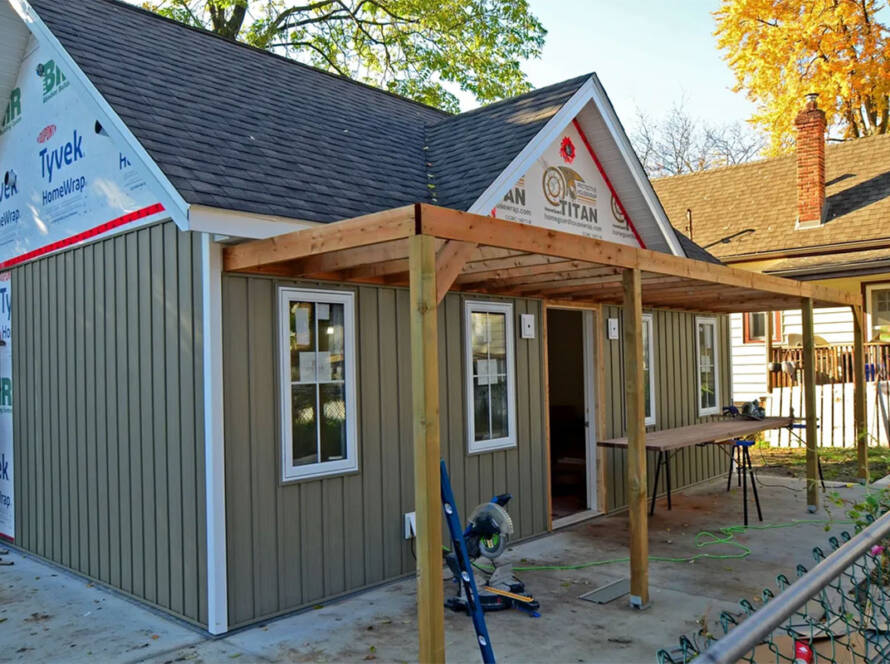
Before diving into designs and finishes, the first (and most important) question is simple: is your property actually suitable for a Laneway tiny home?
While laneway homes are becoming more widely approved, not every property qualifies. Understanding the basics early can save time, money, and frustration.
Laneway Access Is Key
To build a laneway tiny home, your property must have access to a public laneway or alley. This access allows for proper addressing, servicing, emergency access, and waste collection.
No laneway access usually means a laneway home isn’t permitted—though other options like garden suites may still be possible.
Lot Size and Setbacks
Municipalities regulate:
- Minimum lot size
- Required setbacks from property lines
- Distance between the main house and the laneway home
These rules ensure privacy, safety, and neighborhood compatibility. Even small differences in lot dimensions can impact what’s allowed.
Utilities and Servicing
A laneway home must be fully serviced, including:
- Water
- Sewer
- Electrical
- Sometimes gas
The distance from existing services and the condition of current infrastructure can affect both feasibility and cost.
Height and Massing Restrictions
Most municipalities limit:
- Overall height
- Number of storeys
- Roof style
These rules help ensure laneway homes blend into surrounding neighborhoods rather than overpower them.
When a Site Assessment Makes Sense
Because every property is different, a professional site assessment is often the best next step. It confirms:
- Zoning compliance
- Servicing feasibility
- Design constraints
- Budget considerations
Knowing what can be built allows you to design with confidence instead of guesswork. Call us today to book your site assessment.